The journey began with a quick pickup—my wife had just finished her lectures at Gateway Graduate School, and we were officially Galle-bound. Before hitting the road, we finally stopped at a place we’d driven past countless times: Seven Waves Food Lounge, right by the Makumbura Multimodal Center. The “Seven Waves” represent their diverse counters—from Sri Lankan and Italian to a dedicated Juice Bar—but we opted for a classic Chicken Set Menu from the Chinese counter to fuel up.
The drive down the Southern Expressway included the mandatory pitstop at the Welipenna Service Area before we arrived at our home for the weekend: The Dutch Boutique Hotel on Church Street. But before we could settle in, there was business to attend to: bib collection at the Galle Football Ground.
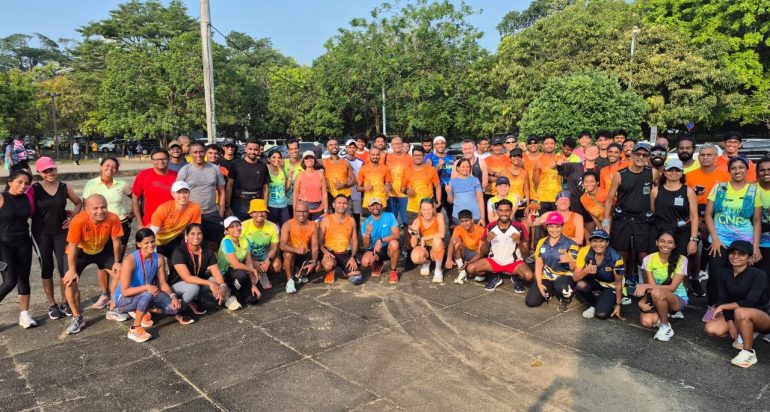
This morning, the streets of Colombo weren’t just our running track—they were our playground.
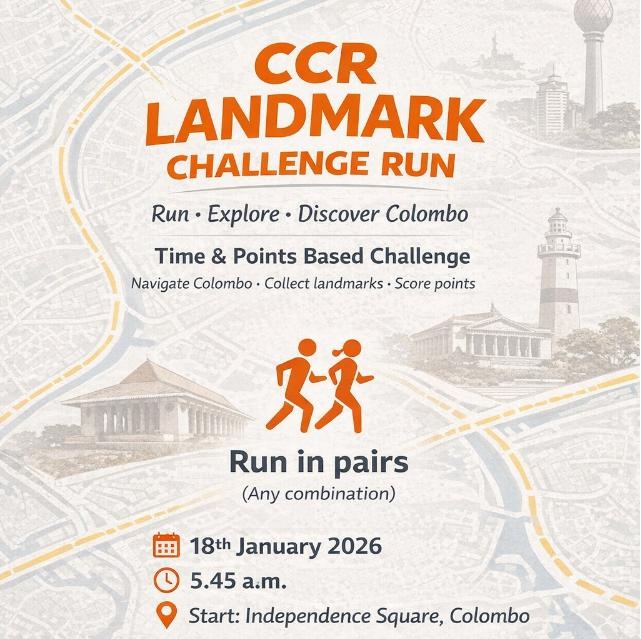
The journey actually started back on January 4th, when the Landmark Challenge was first announced in our CCR WhatsApp group. Almost immediately, the chat exploded with people frantically looking for partners. The banter was top-tier, with some runners joking that it would actually be easier to find a date in Colombo than to find a running partner for a 90-minute scramble!
As I was reading the chatter, I reached out to my running buddy, Nirosha, to see if she was up for it. Luckily, she was all in! It was only as I sat down to write this post that I realized January is clearly my month for successful “proposals.” Exactly ten years ago, on January 9th, I proposed to my wife—so I’m taking this partnership as a very good omen.
Before we could register, we needed the perfect team name. Since Nirosha is an English Lit teacher and I enjoy writing, we wanted something witty. I pitched a few puns: “Worst Pace Scenario,”“Game of Soles,”“Between a Walk and a Hard Pace,” and “Agony of De-Feet.” We were both immediately drawn to the same two, which was the first sign we’d be a great team. In the end, we went with “Agony of De-Feet”!
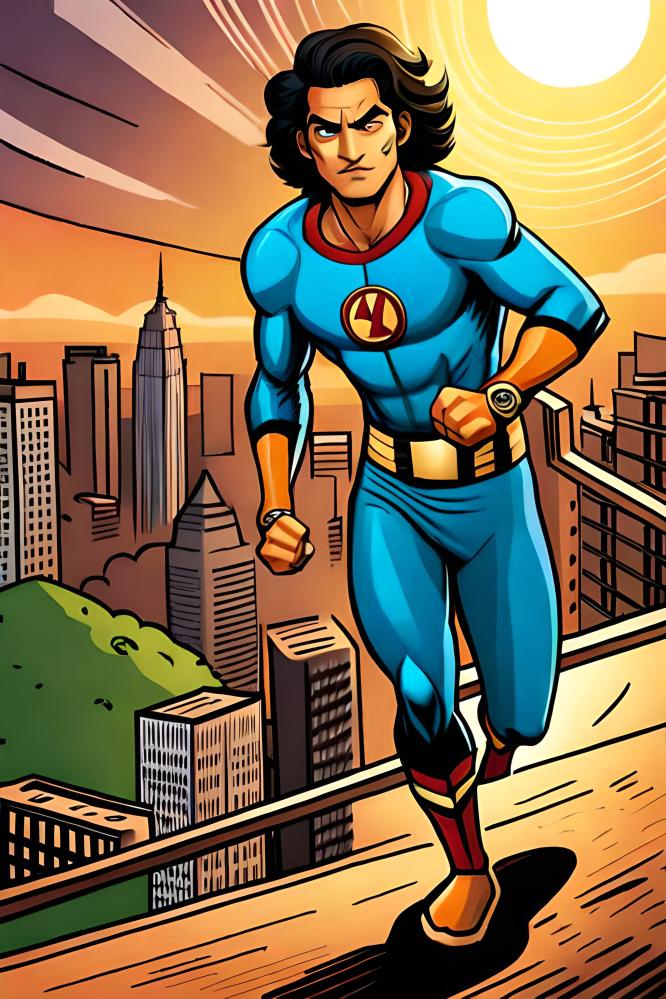
The story of “The Lion” was generated using ChatGPT while the illustration was generated using BlueWillow. Thought this is not my original work, I am publishing this as a first draft, which I hope to further extend.
In this first draft, the characthers, their origins and the basic story line was generated by ChatGPT.
I am excited to take this further and add my own writing and imagination into the story; I also hope I can incorporate more AI technolgoies to help me in this endeavour.
Chapter 1: Origin Story
Rajiv was just an ordinary boy living in Colombo, Sri Lanka. He loved reading comics and dreamed of being a superhero. However, his life took a dramatic turn when his parents were killed in a terrorist attack. Rajiv was devastated, and he vowed to use his powers to fight against evil and prevent anyone else from suffering the same fate as his parents.
One day, while wandering in the streets, Rajiv stumbled upon an ancient artifact. It was a small, intricately carved statue of a lion. As soon as he touched it, he felt a surge of energy flowing through him. He suddenly felt stronger, faster, and more powerful than ever before. He realized that he had been chosen to be the protector of Sri Lanka, and he became the superhero known as “The Lion.”
Meanwhile, Rajiv’s arch nemesis was also born. His name was Ravana, and he was a ruthless criminal who was determined to control the criminal underworld of Sri Lanka. Ravana was jealous of The Lion’s powers and saw him as a threat to his plans. He vowed to defeat The Lion and become the undisputed ruler of Sri Lanka’s criminal underworld.
The second largest town in the Puttalam district is Chilaw. It is one of the few towns in all of Sri Lanka to be known by three names; “Halāvata” in Sinhala, “Cilāpam” in Tamil and of course “Chilaw” in English. Travel Guides introduce Chilaw as the city famous for its three C’s – Coconuts, Crabs and Coreas!
December 26th 2004, a day forever etched in our memories as the day the sea swallowed the coastline. The amount of destruction caused by the rampaging sea was a phenomenon that was beyond comprehension. I remember sitting at home, watching the Boxing Day Cricket match between Sri Lanka and New Zealand when the breaking news interrupted the live telecast; Sri Lanka was hit by a devastating Tsunami.
According to the “Great Chronicle”, popularly referred to as the Mahavamsa, a similar phenomenon had occurred during the reign of King Kelani Tissa. The ancient scripture mentions that King Kelani Tissa sentenced a monk to death by immersing him in a cauldron of oil. This act of cruelty angered the gods who unleashed their wrath by making the sea flow inland submerging Kelaniya. Soothsayers, who advised the king during times of distress, asked his royal highness to sacrifice his daughter to the sea. Thus, the King’s daughter Devi, was cast in to the sea in a beautifully decorated Golden vessel.
The vessel with Princess Devi aboard washed ashore on to the beach near the area which is today known as Pottuvil. The Princess later became the main consort of King Kavan Tissa of Ruhuna, Vihara Mahadevi. She was the mother of King Dutugamunu and Saddhatissa.
Despite being a tiny drop in the Indian Ocean; Sri Lanka is an amazingly diverse country. This diversity has many flavors from life styles to culture to weather and history. Amidst the array of destinations there are certain places that literally make you feel like a tourist. Todays’ piece is on one such location – Negombo.
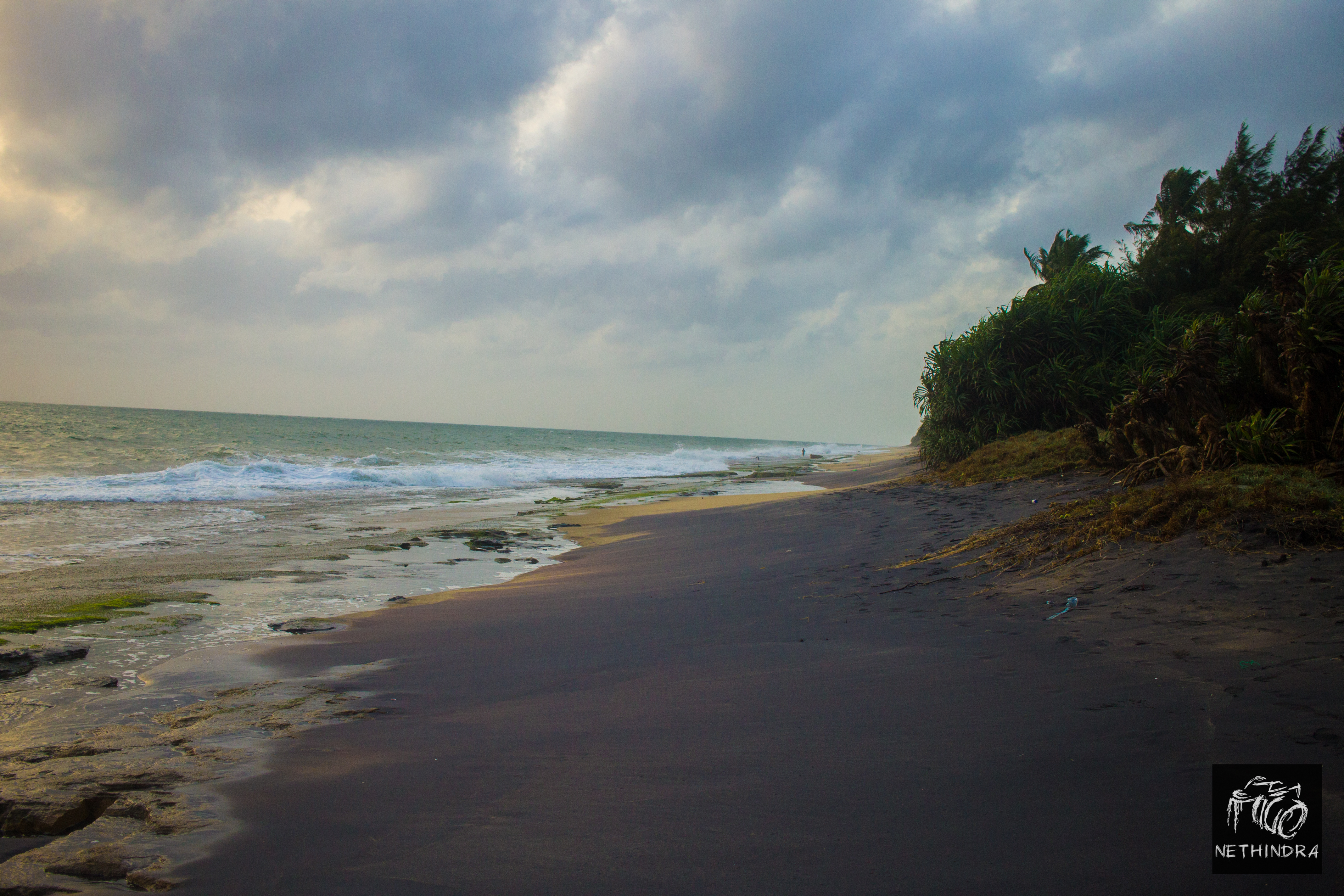
The black sand beach at Negombo
Fondly referred to as “The Little Rome”, Negombo is sprinkled with decidedly ornate Roman Catholic churches that were built during the Portuguese-era. The Katuwapitiya Church and the Grand Street Church are the two biggest parishes in Negombo, a predominantly Christian area. Located about 37 kilometers North of Colombo, the Negombo town is positioned at the mouth of the Negombo lagoon. A traditional fishing town situated a mere 7 kilometers away from the Bandaranayke International Airport in Katunayaka, the economy in this areas is of course based on fisheries and tourism.
The Mahaweli River is the longest river in Sri Lanka. The river originates from the mountains belonging to the Kirigalpoththa and the Thotupola mountain ranges and pours in to the Indian Ocean near Trincomalee; a journy that spans a length of 335 kilometers.
Water from the Mahaweli is used for two main purposes; agriculture and generation of Electricity. Thus, the river is dammed at six locations to divert water for irrigation and to run power houses. More than 40% of our nation’s electricity requirement is fulfilled by these six dams, namely, Victoria, Randenigala, Rantambe, Polgolla, Kothmale and Bowatenne.
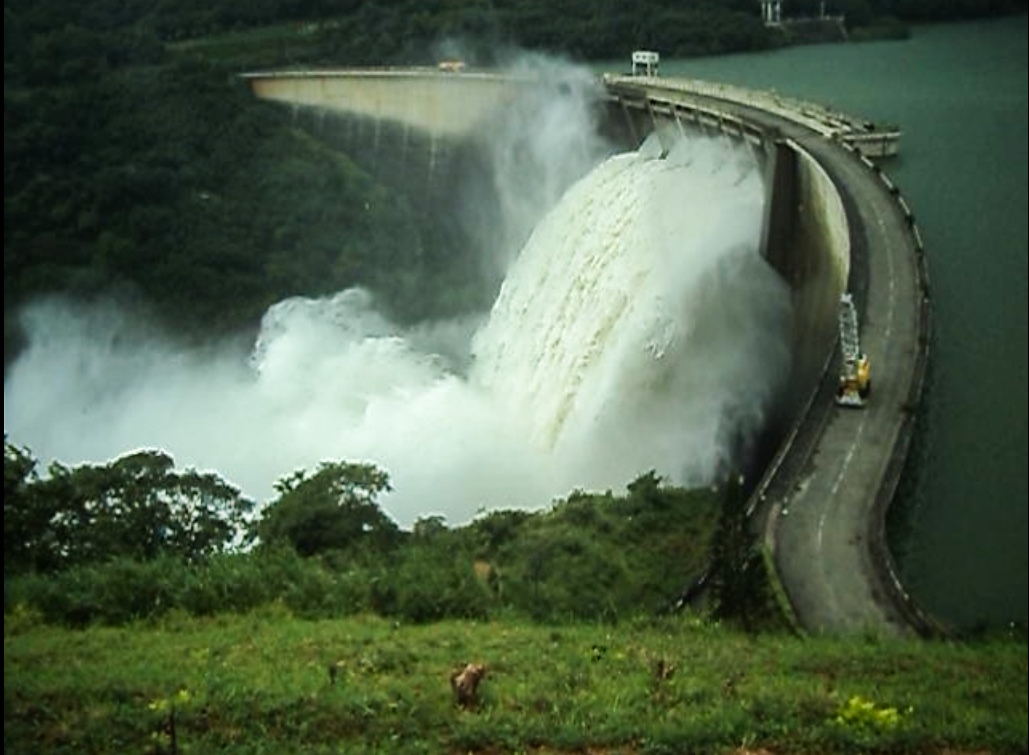
Spill gates of the Victoria Dam opened
Today, I will share with you some information on two dams that are quite close to our ancestral home in Kandy. Continue reading →
Kind Dhatusena was the first King of the Moriyan Dynasty to rule our island nation from 455 AD to 473 AD. He defeated the South Indian invaders who ruled the country for twenty six years and proclaimed Anuradhapura as his Capital. According to the Chronicles of the Chulawansa, Dhatusena was raised by his Uncle, a Buddhist Monk named Mahanama, who ordained him as a Buddhist Monk in order to hide him from the invaders.
Like the many great Kings who ruled Sri Lanka during ancient times, Kind Dhatusena contributed immensely towards agriculture. He constructed 10 irrigation tanks during his reign; the flagship of which is the “Kala Wewa”.
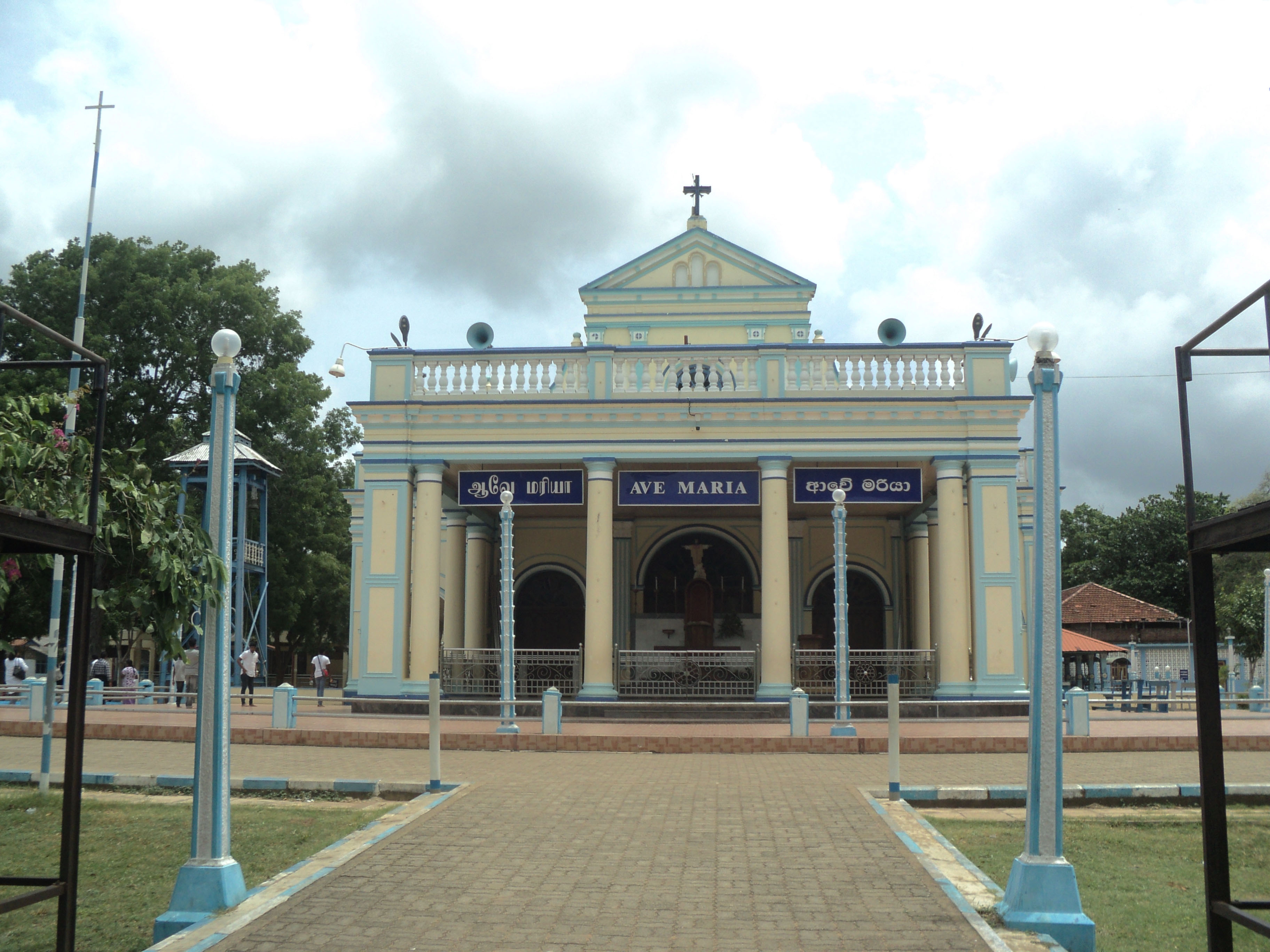
Seated at the Fort Station, waiting for the Kelany Valley Train, my attention was drawn to an announcement over the PA system informing that the train to Thalaimannar is scheduled to leave in a few minutes. Ironically, the train of thought that stemmed from what I had just heard led me to the revelation that I’ve never been to that part of the Island. That night I brought up the topic with my wife and we put in to motion the plan to visit Mannar as our next excursion.
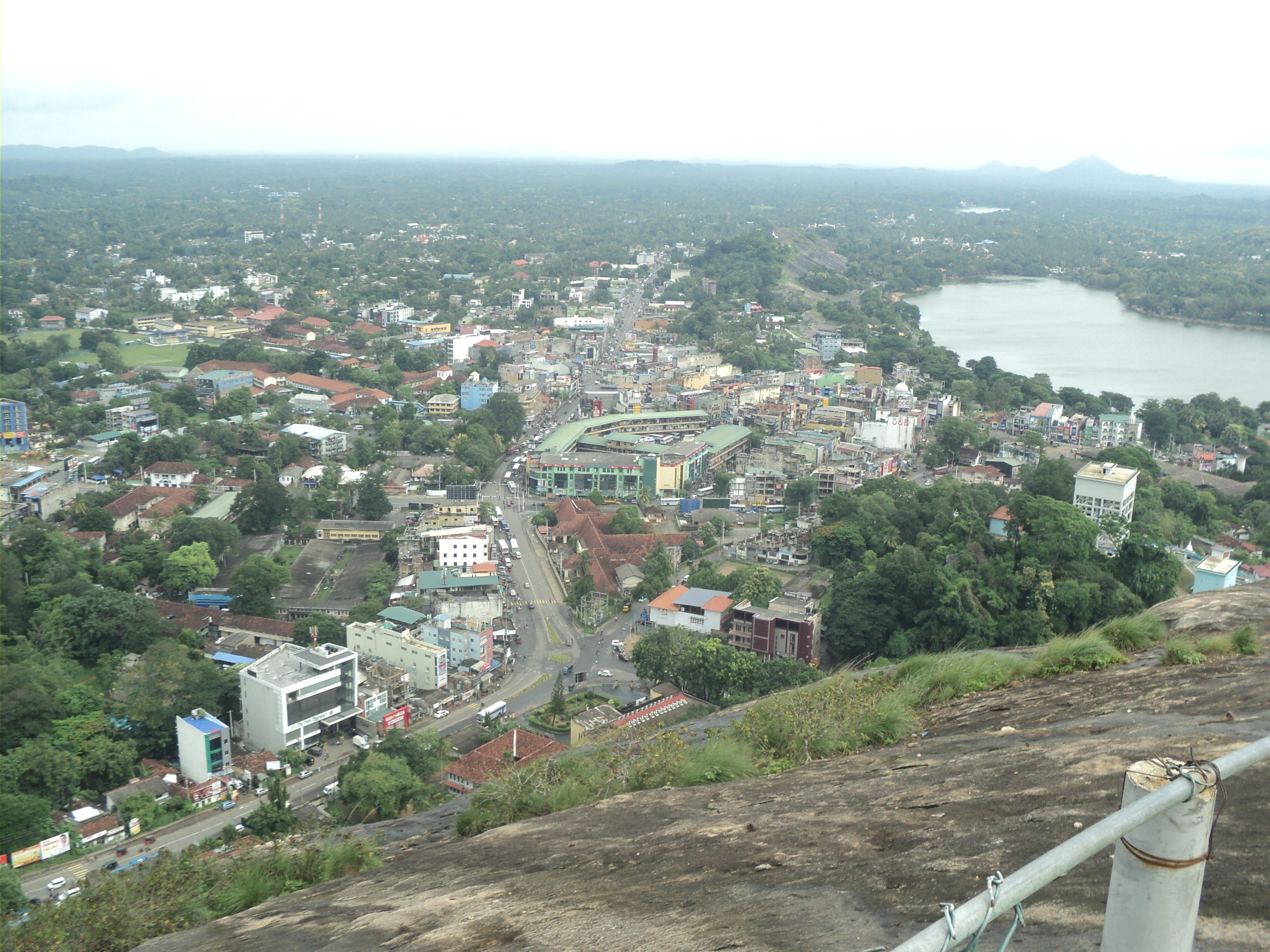
Kurunegala is an ancient city in the North Western region of Sri Lanka that was once the capital city used by four different Kings who ruled over our island nation for around 50 years. Today, the city has become the Administrative Capital of the North Western Province. Located about 94 km away from Colombo, 54 km away from Kandy, 54 km away from Puttalam and 121 km away from Anuradhapura; Kurunegala is a transportation hub that connects many roads leading to all parts of the country.
The city of Kurunegala, as seen from atop Athugala

 Extraordinary pages of an ordinary life